Categories:
Mater researchers have launched a study to investigate if the microbiome is contributing to the shocking rise in bowel cancer rates among younger Australians.
In recent years the gut microbiome has gone from being something many of us had never heard of, to one of the most critical “organs” in our body when it comes to overall health and disease prevention.
Research shows that the food we eat and the composition of the gut microbiome has a significant impact on diseases, including gastrointestinal, neurological and metabolic disorders as well as immune-related diseases.
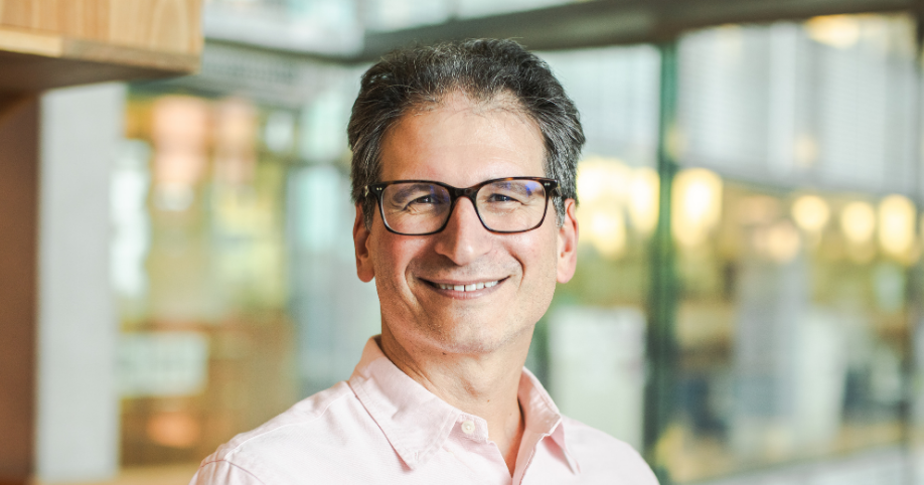
Mater Research’s Associate Professor Jakob Begun said national screening programs have helped reduce bowel cancer rates in people over fifty, but there has been a growing rise in young people being diagnosed with the deadly disease.
“Bowel cancer rates are two to three times higher among Australians born in the nineties compared to those born in the fifties,” A/Prof Begun said.
The alarming trend is now the focus of his new research which explores how environmental and dietary factors affect the gut microbiome and if certain bacteria are driving the development and growth of tumours in the gut.
“Genetics haven’t changed significantly in recent decades, so we’re looking at environmental exposures — particularly the effect of diet,” A/Prof Begun said.
“Ultra-processed foods, high meat consumption, low fibre intake, as well as antibiotic use, are all likely influencing the microbiome in ways that increase cancer risk.”
His team is conducting laboratory studies to test how common food additives — such as artificial sweeteners and emulsifiers — affect gut bacteria and trigger inflammation, a known precursor to cancer.
The yearlong study is funded by Mater and will involve around 20 volunteers.
“We’re treating microbiome samples from healthy people with additives to see if they become more inflammatory.
“The next step is testing in preclinical models to see if these additives accelerate colorectal cancer progression.”
The new research is welcome news for 39-year-old schoolteacher Aimee Geeves who was diagnosed with bowel cancer in November 2024, even though she had no symptoms.
“I had not been sick, and I was feeling completely fine right up until the week I went to the emergency department with strong stomach pains and blood in my stool,” Ms Geeves said.
“I was given a colonoscopy, and they told me that I had a 5-centimetre tumour in the lower part of my bowel.
“It was a huge shock, very surreal considering that I don’t have a family history of bowel cancer.”
Ms Geeves underwent her first of eight rounds of chemotherapy at Mater Private Hospital Springfield on Christmas Eve in 2024 and then had surgery to remove the tumour in June 2025.
Her treatment left her with an ileostomy bag which was finally removed in September last year.
“It was the day after my 39th birthday and I was so relieved to be done with it,” she said.
“The hardest part for me in dealing with cancer is all of the physical side effects, losing your hair, your eyelashes and being tired constantly.
“Having said that, I can’t speak highly enough of my treatment at Mater, the nurses and everyone almost become part of your family.”
More than five thousand people die from bowel cancer every year in Australia, making it one of the country’s most deadly cancers.
Australia also has the highest incidence of bowel cancer rates in the world, in people under 50.
A/Prof Begun hopes his research will eventually expand into translational studies using human tissue samples.
“Pre-clinical models are useful, but human validation is essential,” said A/Prof Begun.
“We’re working with collaborators at Mater and QIMR Berghofer Medical Research Institute to collect samples and compare microbial signatures in cancerous and healthy tissue.”
The team is also exploring whether a novel anti-inflammatory compound — originally developed to treat inflammatory bowel disease — could help prevent colorectal cancer.
The compound, derived from bacterial products, has shown promise in reducing gut inflammation in multiple preclinical models of Irritable Bowel Disease (IBD).
“We’re now testing it in accelerated models of colorectal cancer to see if it can reduce tumour incidence and severity,” said A/Prof Begun.
“If successful, it could progress to clinical trials as a preventative therapy,” he said.
In recent years the gut microbiome has gone from being something many of us had never heard of, to one of the most critical “organs” in our body when it comes to overall health and disease prevention.
Research shows that the food we eat and the composition of the gut microbiome has a significant impact on diseases, including gastrointestinal, neurological and metabolic disorders as well as immune-related diseases.
Mater Research’s Associate Professor Jakob Begun said national screening programs have helped reduce bowel cancer rates in people over fifty, but there has been a growing rise in young people being diagnosed with the deadly disease.
“Bowel cancer rates are two to three times higher among Australians born in the nineties compared to those born in the fifties,” A/Prof Begun said.
The alarming trend is now the focus of his new research which explores how environmental and dietary factors affect the gut microbiome and if certain bacteria are driving the development and growth of tumours in the gut.
“Genetics haven’t changed significantly in recent decades, so we’re looking at environmental exposures — particularly the effect of diet,” A/Prof Begun said.
“Ultra-processed foods, high meat consumption, low fibre intake, as well as antibiotic use, are all likely influencing the microbiome in ways that increase cancer risk.”
His team is conducting laboratory studies to test how common food additives — such as artificial sweeteners and emulsifiers — affect gut bacteria and trigger inflammation, a known precursor to cancer.
The yearlong study is funded by Mater and will involve around 20 volunteers.
“We’re treating microbiome samples from healthy people with additives to see if they become more inflammatory.
“The next step is testing in preclinical models to see if these additives accelerate colorectal cancer progression.”
The new research is welcome news for 39-year-old schoolteacher Aimee Geeves who was diagnosed with bowel cancer in November 2024, even though she had no symptoms.
“I had not been sick, and I was feeling completely fine right up until the week I went to the emergency department with strong stomach pains and blood in my stool,” Ms Geeves said.
“I was given a colonoscopy, and they told me that I had a 5-centimetre tumour in the lower part of my bowel.
“It was a huge shock, very surreal considering that I don’t have a family history of bowel cancer.”
Ms Geeves underwent her first of eight rounds of chemotherapy at Mater Private Hospital Springfield on Christmas Eve in 2024 and then had surgery to remove the tumour in June 2025.
Her treatment left her with an ileostomy bag which was finally removed in September last year.
“It was the day after my 39th birthday and I was so relieved to be done with it,” she said.
“The hardest part for me in dealing with cancer is all of the physical side effects, losing your hair, your eyelashes and being tired constantly.
“Having said that, I can’t speak highly enough of my treatment at Mater, the nurses and everyone almost become part of your family.”
More than five thousand people die from bowel cancer every year in Australia, making it one of the country’s most deadly cancers.
Australia also has the highest incidence of bowel cancer rates in the world, in people under 50.
A/Prof Begun hopes his research will eventually expand into translational studies using human tissue samples.
“Pre-clinical models are useful, but human validation is essential,” said A/Prof Begun.
“We’re working with collaborators at Mater and QIMR Berghofer Medical Research Institute to collect samples and compare microbial signatures in cancerous and healthy tissue.”
The team is also exploring whether a novel anti-inflammatory compound — originally developed to treat inflammatory bowel disease — could help prevent colorectal cancer.
The compound, derived from bacterial products, has shown promise in reducing gut inflammation in multiple preclinical models of Irritable Bowel Disease (IBD).
“We’re now testing it in accelerated models of colorectal cancer to see if it can reduce tumour incidence and severity,” said A/Prof Begun.
“If successful, it could progress to clinical trials as a preventative therapy,” he said.