A new opinion paper is challenging a popular theory about how cancer cells survive chemotherapy, urging the global scientific community to redirect its focus toward the true drivers of tumour growth.
For years, scientists observing cancer cells under the microscope after chemotherapy have noticed the appearance of massive, bloated cells stuffed with genetic material. Dubbed ‘polyploid giant cancer cells’ (PGCCs), they have increasingly been blamed for cancer recurrence and a growing body of research has suggested that these giants not only survive chemotherapy but act as ‘mother cells’, supposedly shrinking back down to give birth to highly aggressive, drug-resistant cancer cells.
But according to a new paper published in Trends in Cell Biology, this reputation is an illusion.
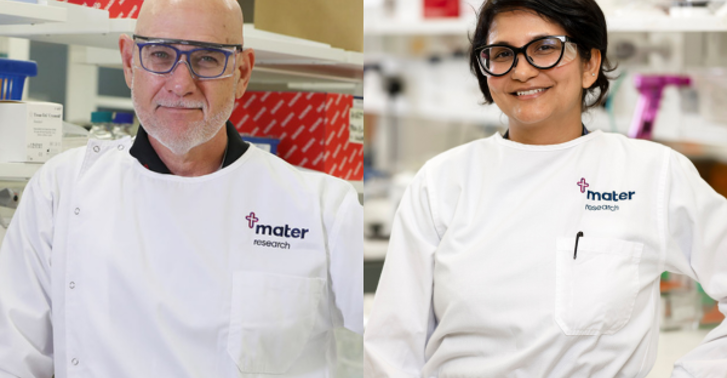
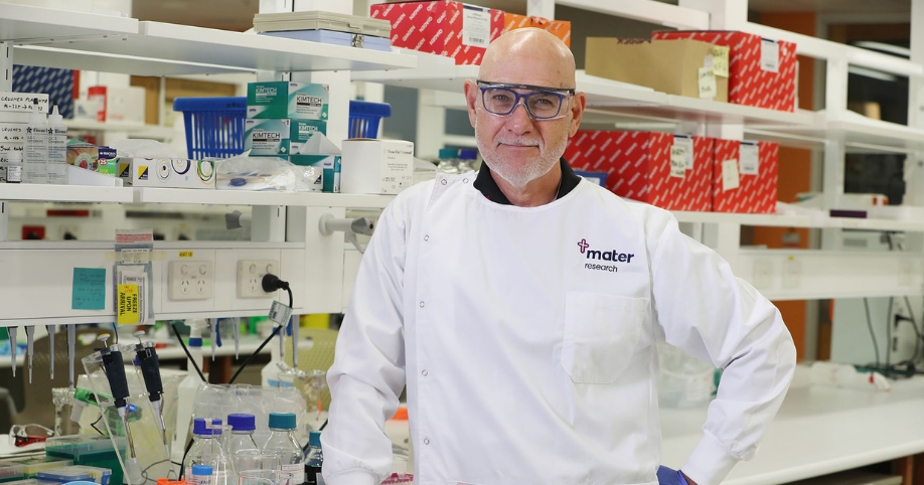
The paper, which was co-led by Professor Brian Gabrielli is a collaboration between Mater Research, The University of Queensland and Virginia Tech, and argues that true PGCCs are biological dead ends and the real engine of cancer progression is a much less conspicuous cell known as a ‘tetraploid’. The researchers outline three major flaws in the PGCC theory:
- Mistaken identity: Many lab studies claiming to show PGCCs driving cancer areactually justobservingtetraploid cells. The researchers proved that the brief periods of drug exposure used in these lab tests are only long enough for a single DNA doubling event, not the multiple roundsrequiredto make a true giant cell.
- Mechanical failure: Once a cell reaches eight sets ofDNAor higher, its internal machineryessentially breaksdown. The microscopic cablesrequiredto pull massive amounts of DNA apart cannot handle the load,renderingthe cell unable to divide. They become ‘zombie’ cells, which are alive, but incapable of spawning new tumours.
- Optical illusion: The appearance of new cancer cells around thesegiantsweeks after treatment is an illusion. While the giants sit harmlessly, a small fraction of regular cancer cells that went into a deep hibernation to survive the chemotherapy simply wake up and start dividing again.
Prof Gabrielli said that the debate comes down to how cells copy their DNA.
“Normal human cells have two sets of genetic instructions,” he said.
“When cancer cells are stressed by chemotherapy, they sometimes duplicate their DNA to divide but get stuck and fail to physically split.
“If this happens once, the cell becomes a tetraploid with four sets of DNA. If it happens over and over again, it becomes a massive PGCC with sixteen, or more sets of DNA.
“Having exactly four sets of DNA gives a cell a dangerous superpower. It creates enough genetic chaos that the cell can rapidly mutate and adapt, but not so much chaos that the cell’s division machinery breaks down.”
The research team urge fellow researchers to focus on tetraploids.
"Tetraploids are the cells that survive the initial hit and have the genomic flexibility to figure out how to resist our drugs," said Prof Gabrielli.
"They are the real drivers of worse treatment outcomes.
“This distinction carries massive implications for the development of new cancer treatments into the future.”
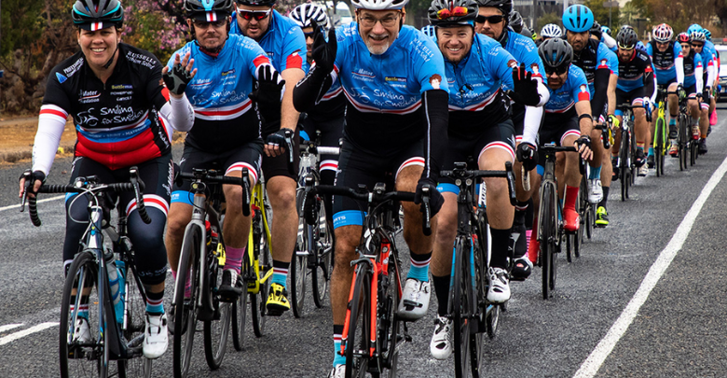
This research was a collaborative effort involving researchers from Mater Research, The University of Queensland and Virginia Tech. Prof Gabrielli’s work on this project was proudly supported by funds from Mater Foundation’s Smiling for Smiddy.
The full paper, titled “Tetraploids or polyploid giants: who is truly dangerous?” was originally published in Trends in Cell Biology in March 2026.