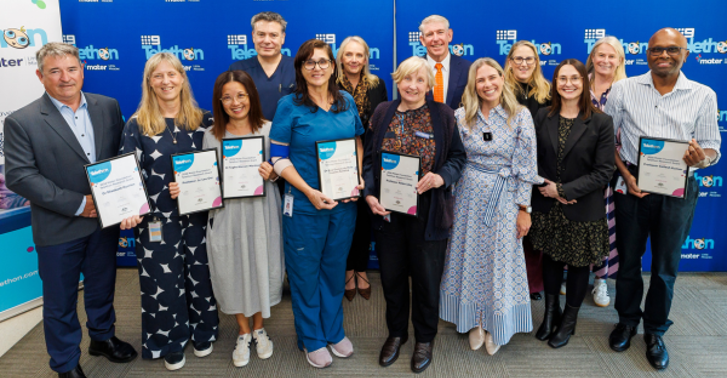
Mater Research was founded on the brilliance and ability of women whose curiosity and initiative created an internationally-recognised medical institute, paving the way for future generations of women.
International Day of Women and Girls in Science provides us with an opportunity to celebrate the contributions of all women to advancing science while also acknowledging the barriers that still exist.
Mater Research Executive Director, Professor Allison Pettit, has a strong record of attracting and recruiting women and is paving the way for future generations of women across science, technology, engineering and mathematics (STEM).
“More than 60 per cent of our Research Group Leaders are women, and nearly 80 per cent of our staff are women,” said Prof Pettit.
“We know that women are attracted to working at Mater Research because of our dedicated funding streams that help with them progress their careers.
“I am proud of our culture at Mater Research – it's a place where women are supported, valued and given the tools to thrive.”
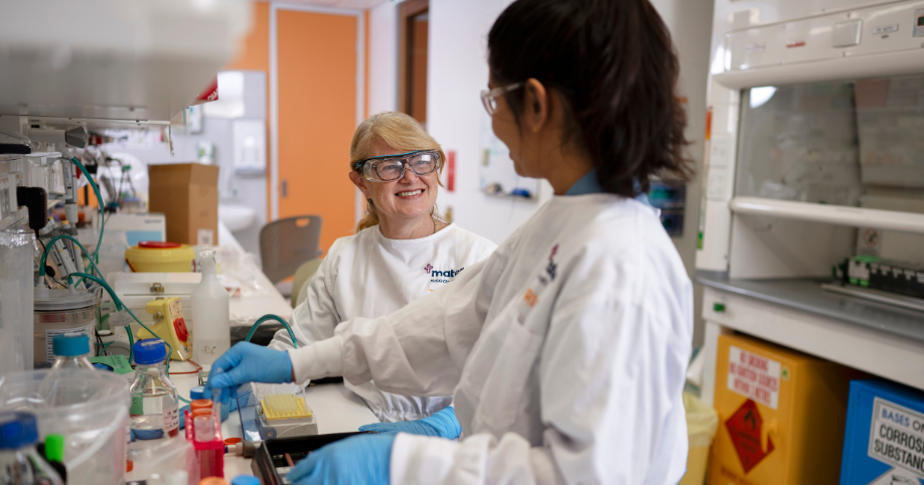
Across Mater Research, we spoke with biomedical and clinical researchers about how they are inspiring, supporting and empowering the next generation of scientists.
Why this day matters
Despite significant progress, the data shows a clear loss of talent as women move through their careers. The gender gap in science, technology, engineering and mathematics (STEM) persists at every level:
- Graduates: Women make up only 35 per cent of STEM graduates worldwide.
- Researchers: Globally, just 1 in 3 researchers are women (dropping to under 10 per cent in some regions).
- Workforce: Across G20 countries, women hold only 22 per cent of STEM jobs.
- Leadership: The gap is widest at the top, where just 1 in 10 STEM leaders are women.
The journey to a career in science often begins long before university. For research fellows Dr Stephanie Workman and Dr Soi Law, outreach with school children is a key to unlocking potential.
Through initiatives like the Wonder of Science program at The University of Queensland, they are bringing science to life for school-aged children. Their travels to rural and regional Queensland help students with science projects and encourage them to visualise themselves as future scientists.
"Through outreach in schools, we're inspiring the next generation of female scientists by getting them involved in research from a young age," said Dr Workman.
Dr Law said it was visibility of women who work in STEM was important, particularly in communities that may have limited access to scientific role models.
"The program sees scientists and PhD students in rural and regional Queensland, helping students with science projects and encouraging their interest in STEM," she says.
Likewise, Director of Clinical Research Associate Professor Lucy Burr said she was a ‘great believer that you can’t be what you can’t see’.
“I want everyone to know that if I can do it, anyone can do it,” she said.
Pregnancy and Development Research Group Leader Professor Vicki Clifton said that closing the STEM gender gap required tangible action, particularly financial incentives that allowed talent to flourish.
“Scholarships for honours projects and PhDs are central to this mission,” she said.
“Providing financial stability ensures that promising female researchers can continue their work and advance their careers without barriers.”
Grants Officer Kylie Hengst noted that the landscape of medical research has transformed during her 35-year long career.
“What was once a difficult environment with very few female researchers is now a vibrant field where women are making their mark,” she said.
“Today, I help navigate funding in what remains a competitive field. Mater Research really supports our researchers to progress through what can be a very tricky environment," said Ms Hengst.
Research Officer Dr Luzia Bukali said beyond funding, a strong network of women was critical for longevity in the field.
“Women really lift one another up,” she said.
This extended to mentorship, particularly for those navigating the balance between motherhood and research.
“For me, I think it's really important to have strong women mentors that are able to balance both the parenting commitments of being a mother as well as leading a really strong research career,” said Dr Grace Branjerdporn, Research Team Leader at Catherine’s House for Mothers, Babies and Families
To the girls dreaming of a future in science, Diabetes and Metabolism Research Group Leader Professor Jo Forbes has a simple but empowering message.
"Go girl power! Don't let anybody out there tell you or define who you are or what you can do,” she said.
“Go out there and get it. We're just as good at science as everybody else is!"