
Mater Research scientists have secured two prestigious National Health and Medical Research Council (NHMRC) Ideas Grants, backing ambitious Queensland-led projects that tackle some of the state’s most pressing health challenges—from the surge in attention deficit hyperactivity disorder (ADHD) diagnoses in children to the deadliest forms of breast cancer.
Together worth almost $3.9 million, the grants support world-class research that aims to unlock new treatment pathways, improve quality of life and deliver precision medicine where options are currently limited.
Tackling the brain’s “timing glitch” in ADHD
As ADHD diagnoses continue to rise and Queensland leads the nation in reforming access to care, a Mater Research team is investigating a fundamental biological question: does mistimed brain development create lifelong difficulties with attention, learning and social connection?
Led by Dr Carlie Cullen, Chief Investigator and head of Mater Research’s Glial Neurobiology Group, the project received $2.02 million to bring together collaborators from The University of Queensland, Queensland Brain Institute, the Australian National University and the University of Western Australia.
The research focuses on myelination—the process by which nerve fibres are insulated to ensure electrical signals travel with precision.
Dr Cullen said that timing is everything.
“We think delayed myelination during a critical window in early life can set up lifelong circuit glitches,” Dr Cullen said.
“If we can understand that timing, and safely adjust it, we may ease the behaviours that make school, work and relationships hard for many Queensland families.”
Using a novel genetic model, the team will precisely delay myelination and track changes in attention, learning, anxiety and social behaviour. Advanced molecular techniques, including RNA sequencing and proteomics, will be used to identify the biological pathways driving these changes.
The researchers will also test whether repetitive transcranial magnetic stimulation (rTMS)—a non-invasive therapy already used clinically for depression—can restore network timing and improve behaviour.
A precision strike against lethal breast cancers
In a second breakthrough, Mater Research scientists are taking aim at the most aggressive and deadly forms of breast cancer by targeting a newly identified molecular “bullseye”.
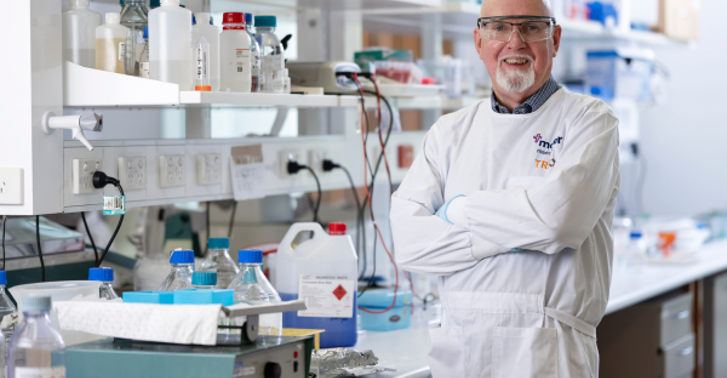
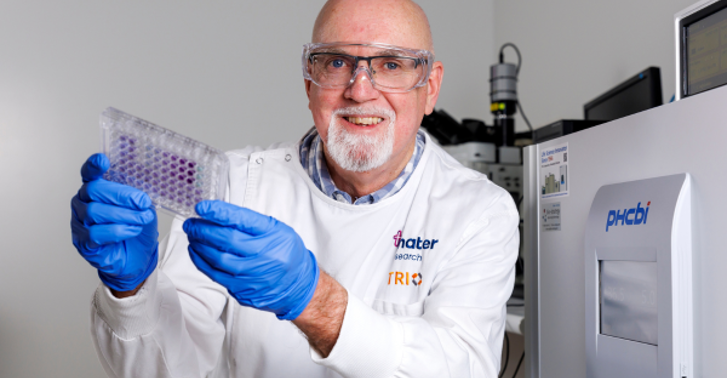
Backed by a $1.86 million grant, Chief Investigator Professor John Hooper and his team have identified a receptor called CDCP1, found at high levels on the surface of the most treatment-resistant breast cancers.
Breast cancer killed more than 665,000 women worldwide last year, but Prof Hooper, who leads the Mater Research Cancer Biology Research Group, says this breakthrough offers hope—not just for breast cancer, but for other cancers where CDCP1 is found, including ovarian and bladder.
“These cancers, including triple-negative, treatment-resistant HER2-positive and metastatic ER-positive, are the worst of the worst,” he said.
“They spread fast, often to the brain and lungs, resist standard therapies like chemotherapy and hormone blockers, and frequently return even after surgery.
“For many women, these diagnoses mean limited options and poor survival rates.”
The project will pioneer a scan-first, treat-smarter strategy. Using PET imaging, clinicians will identify patients whose tumours express CDCP1, then deliver cancer-killing drugs directly to those cells using antibody-drug conjugates.
In preclinical studies, the approach eradicated tumours when combined with existing therapies, offering new hope for women with triple-negative, resistant HER2-positive and metastatic ER-positive breast cancer.
Mater Research Executive Director Professor Allison Pettit said the two NHMRC Ideas successes highlight Queensland’s leadership in translating discovery science into real-world impact.
“These projects reflect the ambition of our researchers and our commitment to improving lives—whether that’s helping children thrive at school or giving women facing aggressive cancer a fighting chance,” she said.