A Mater Research study has revealed that placentas hold the key to identifying children at risk of developing allergies.
In recent decades, Australia has become the world’s food allergy capital, with around one in 10 children diagnosed after suffering potentially harmful reactions to foods such as peanuts, eggs and milks.
The groundbreaking study led by Professor Vicki Clifton, of Mater Research and The University of Queensland, found that genetic analysis of a baby’s placenta can reveal if they will be susceptible to childhood food allergies.
“Our Phase 1 clinical trial has proven that the genetic profile of a newborn’s placenta can predict a child’s risk of developing allergies,” Prof Clifton said.
“This early identification is a game-changer in preventative care for allergies.
“Instead of being alerted by a life-threatening event such as anaphylaxis, the study has shown that we can identify children at risk at a much earlier and safer stage.”
The study, A Phase 1 Prognostic Trial for Predicting Paediatric Allergy Using the Placenta at Birth, has been published in Clinical & Experimental Allergy.
The research team analysed the placentae of 366 Australian mothers and tracked the allergies of their children up until the age of seven.
Using advanced statistical analysis, the researchers identified five specific glucocorticoid-regulated genes that serve as primary biological markers for food allergies.
Prof Clifton, whose son has a life-threatening fish allergy, said the findings could bring much needed guidance for parents.
“This is an exciting time for placental research, so no more throwing away the placenta at birth, it may just hold important information on our future health,” Prof Clifton said.
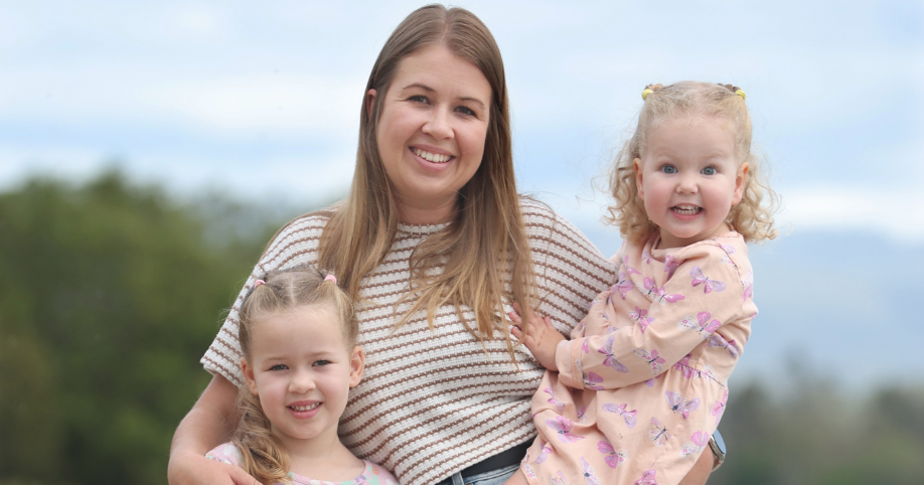
Mother-of-two Jackie Grounds, who is also on the research team, said the knowledge could be life-changing for families managing allergies, including her own.
“My two-year-old daughter Margot has an egg allergy and was diagnosed at six months when we started introducing her to solid food,” Ms Grounds said.
“She instantly developed hives on her face, chest and back, and I was worried that she might go into anaphylactic shock.
“It was terrifying how fast it happened. I called 000 and we had an ambulance take her to hospital,” she said.
As a nutrition expert, Ms Grounds said she wasn’t expecting her second child to have food allergies because no-one else in the family was affected by them.
She has now removed all egg products from the home and has provided medication to her daughter’s childcare centre, which remains vigilant to make sure she is not exposed accidentally.
“It would have been helpful to know that this allergen could potentially occur with my child, then I would have been more cautious with introducing allergens, and I would have had an action plan and I would have been ready with antihistamines,” Ms Grounds said.
Prof Clifton said further work would be needed to develop an appropriate screening test for placentas.
"Creating a clinical tool that can accurately identify high-risk infants at birth, regardless of maternal or paternal allergic history, would significantly help in providing advice to parents,” Prof Clifton said.
“This tool could also prove exceptionally powerful as a negative predictor to identify infants who are highly unlikely to develop allergies.”
She said combining this early-warning placental screening with current Australasian Society of Clinical Immunology and Allergy (ASCIA) guidelines—such as the targeted introduction of allergenic foods and optimised breastfeeding—could radically improve early intervention strategies before a child’s first severe allergic event.
While further RNA-sequencing on larger cohorts is required before the test reaches the clinic, this research firmly establishes the placenta as a vital diagnostic tool for combating early-onset, non-communicable diseases.
Professor Clifton’s research is supported by a National Health and Medical Research Council (NHMRC) Senior Research Fellowship and Mater Foundation.
This collaborative research project involved Mater Research, The University of Queensland, the University of Toronto, the University of Adelaide, Queensland University of Technology, Murdoch Children’s Research Institute and Deakin University.
The groundbreaking study led by Professor Vicki Clifton, of Mater Research and The University of Queensland, found that genetic analysis of a baby’s placenta can reveal if they will be susceptible to childhood food allergies.
“Our Phase 1 clinical trial has proven that the genetic profile of a newborn’s placenta can predict a child’s risk of developing allergies,” Prof Clifton said.
“This early identification is a game-changer in preventative care for allergies.
“Instead of being alerted by a life-threatening event such as anaphylaxis, the study has shown that we can identify children at risk at a much earlier and safer stage.”
The study, A Phase 1 Prognostic Trial for Predicting Paediatric Allergy Using the Placenta at Birth, has been published in Clinical & Experimental Allergy.
The research team analysed the placentae of 366 Australian mothers and tracked the allergies of their children up until the age of seven.
Using advanced statistical analysis, the researchers identified five specific glucocorticoid-regulated genes that serve as primary biological markers for food allergies.
Prof Clifton, whose son has a life-threatening fish allergy, said the findings could bring much needed guidance for parents.
“This is an exciting time for placental research, so no more throwing away the placenta at birth, it may just hold important information on our future health,” Prof Clifton said.
Mother-of-two Jackie Grounds, who is also on the research team, said the knowledge could be life-changing for families managing allergies, including her own.
“My two-year-old daughter Margot has an egg allergy and was diagnosed at six months when we started introducing her to solid food,” Ms Grounds said.
“She instantly developed hives on her face, chest and back, and I was worried that she might go into anaphylactic shock.
“It was terrifying how fast it happened. I called 000 and we had an ambulance take her to hospital,” she said.
As a nutrition expert, Ms Grounds said she wasn’t expecting her second child to have food allergies because no-one else in the family was affected by them.
She has now removed all egg products from the home and has provided medication to her daughter’s childcare centre, which remains vigilant to make sure she is not exposed accidentally.
“It would have been helpful to know that this allergen could potentially occur with my child, then I would have been more cautious with introducing allergens, and I would have had an action plan and I would have been ready with antihistamines,” Ms Grounds said.
Prof Clifton said further work would be needed to develop an appropriate screening test for placentas.
"Creating a clinical tool that can accurately identify high-risk infants at birth, regardless of maternal or paternal allergic history, would significantly help in providing advice to parents,” Prof Clifton said.
“This tool could also prove exceptionally powerful as a negative predictor to identify infants who are highly unlikely to develop allergies.”
She said combining this early-warning placental screening with current Australasian Society of Clinical Immunology and Allergy (ASCIA) guidelines—such as the targeted introduction of allergenic foods and optimised breastfeeding—could radically improve early intervention strategies before a child’s first severe allergic event.
While further RNA-sequencing on larger cohorts is required before the test reaches the clinic, this research firmly establishes the placenta as a vital diagnostic tool for combating early-onset, non-communicable diseases.
Professor Clifton’s research is supported by a National Health and Medical Research Council (NHMRC) Senior Research Fellowship and Mater Foundation.
This collaborative research project involved Mater Research, The University of Queensland, the University of Toronto, the University of Adelaide, Queensland University of Technology, Murdoch Children’s Research Institute and Deakin University.