
Artificial intelligence is set to replace human guesswork in one of the most complex medical procedures available – brain surgery for severe epilepsy.
While surgery is currently the best option for patients whose epilepsy is drug-resistant, it relies heavily on human interpretation, which is a major limiting factor for gold standard presurgical evaluation.
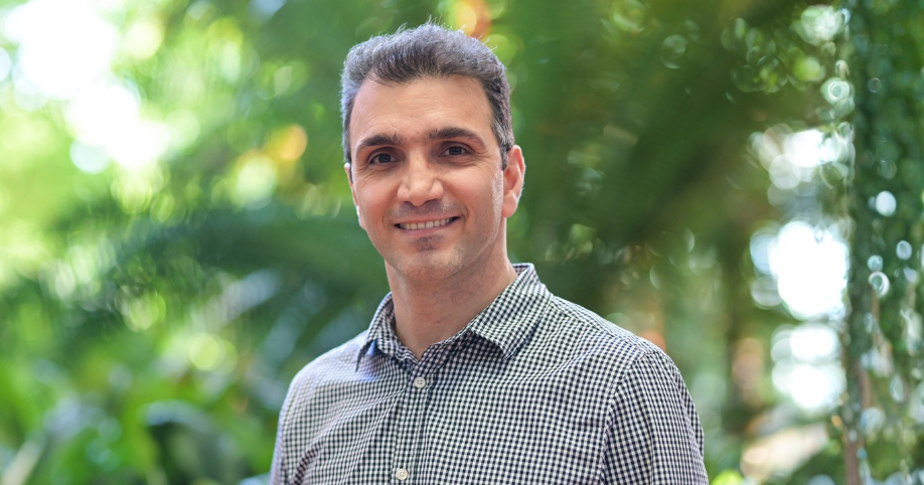
Dr Hamid Karimi-Rouzbahani, of the Mater Epilepsy Unit at Mater Hospital Brisbane, is hoping to remove that uncertainty by using AI methods to help pinpoint exactly where seizures originate in the brain.
“For the roughly 30 per cent of drug-resistant individuals, resective brain surgery—where a specific portion of the brain is surgically removed—often represents the only realistic path to seizure freedom,” Dr Karimi-Rouzbahani said.
“However, it currently only works long-term in about 60 per cent of cases and relies heavily on subjective visual assessments.
“Right now, doctors have to manually study complex charts of brain electrical activity and rely on their own eyesight to figure out exactly which part of the brain a seizure is starting from.
“Assessing the risk to a patient's cognitive functions - such as memory and language - often depends on traditional pen-and-paper neuropsychological tests that lack millisecond-resolution neural data.”
The biomedical engineer and researcher at Mater Research has now been awarded a highly competitive Queensland Health Clinical Research Fellowship, a $250,000 funding grant which will help transform his project ‘Computational Delineation of the Epileptogenic Zone and Enhancing Cognitive Outcome in Epilepsy Surgery’ into practical processes.
“By replacing subjective visual assessments with objective, AI-driven approaches we can vastly improve surgical outcomes for patients living with severe, drug-resistant epilepsy,” said Dr Karimi- Rouzbahani.
“We will aim to tackle the current limitations by combining advanced computer-based brain engineering with clinical protocols.”
The team will build improved signal-processing and machine-learning algorithms to analyse electrical signals from the brain (electrophysiological data). This AI tool will sort patterns in brain networks to produce an objective, number-based map of the area in the brain causing seizures (epileptogenic zone) to help inform the doctor’s treatment decisions.
Then, to reduce the risk of cognitive decline after surgery, patients will complete custom computer tasks to test their memory and language while their brain signals are recorded.
Through linking the task results with brain network activity, it will allow teams to create accurate “functional risk maps” – showing what areas are critical cognitive structures and should be avoided during surgery.
A partnership with Epilepsy Queensland will play a vital role in the project, ensuring research protocol remains sensitive to patient wellbeing and that outcomes are communicated clearly and respectfully to the community.
The work will also be supported by Mater Research, through a Betty McGrath Healthcare Delivery and Innovation Seeding Grant - to increase surgical success rates, streamline presurgical evaluations and ultimately deliver life-changing outcomes for Queenslanders living with epilepsy.
Dr Karimi-Rouzbahani will collaborate closely with Professor Aileen McGonigal who will provide clinical oversight and validation, and Professor Jason Mattingley from The University of Queensland, who brings world-leading expertise in cognitive functional mapping.


