
The Mater Research Biobank (MRB) is a non-profit service aimed at facilitating ethically sound and scientifically valid research using biological samples and associated clinical data.
Through the collection and storage of biospecimens coupled with routine clinical visits or procedures we provide a safe and efficient way for participants to contribute to cutting-edge research that enables the identification of patterns and trends that could lead to new methods of disease prediction, prevention and treatment.
Who we are
The MRB custodians are Dr Rohan Laurie and Mr Kaltin Ferguson, who act as the Coordinating Principal Investigator and Biobank Manager. The biobank has several Principal Investigators (PI) who are principal contributors, historical custodians and leaders in their own specialist areas. The MRB is designed to be flexible and accommodating, enabling additional PIs to join within their area of specialty.
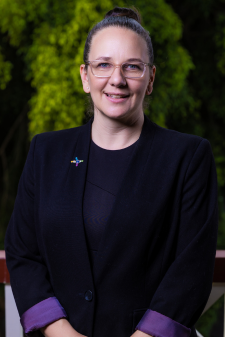
Associate Professor Lucy Burr
Director of Clinical Research and Respiratory, Infectious Diseases and Thoracic Oncology Principal Investigator
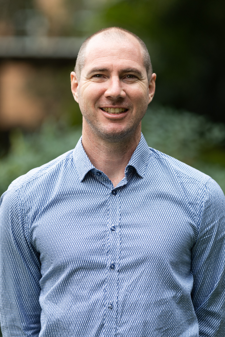
Mr Kaltin Ferguson
Biobank Manager
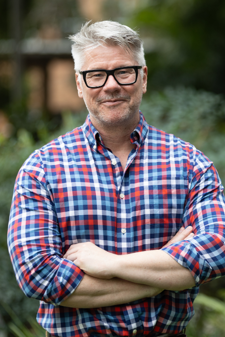
Dr Rohan Lourie
Coordinating Principal Investigator
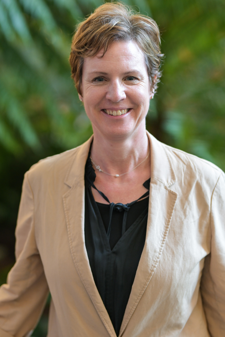
Professor Aileen McGonigal
Neurosciences Principal Investigator
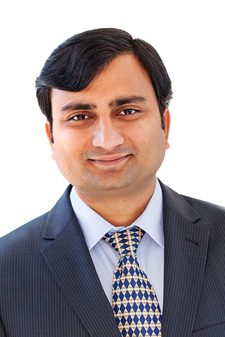
Dr Vikram Jain
Thoracic and Colorectal Oncology Principal Investigator
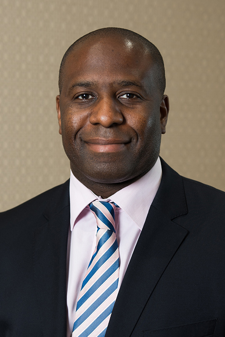
Dr Jim Coward
Gynae Oncology Principal Investigator
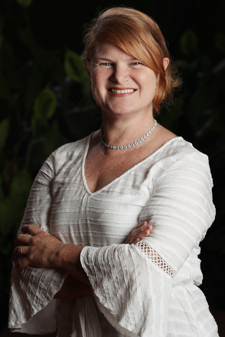
Professor Josephine Forbes
Diabetes, Endocrine and Renal Disease Principal Investigator
The MRB PIs are supported by Research Assistants who act as the main contact point for patients:
- Samuel Kelly
- Olivia Sandral
- Claire Solite.
All research at Mater is overseen by the Mater Research Governance office.
The Mater Research Biobank would also like to acknowledge the various teams within both Mater Hospital Brisbane and Mater Private Hospital Brisbane who support ongoing specimen collection. These teams include (but are not limited to):
- Anaesthetics department
- Breast and endocrine department
- Gynae-oncology department
- Medical oncology department
- Pathology department
- Respiratory department
- Urology department,
- Theatre staff and associated administrators.
Learn more
What we collect
For planned procedures, or where clinically indicated samples are not required for diagnostic purposes, biological specimens may be collected from consented donors. These samples may be collected fresh or accessed from existing cryostores. Availability varies, however, specimens may include:
- Blood products (serum, plasma, buffy coat, and peripheral blood mononuclear cells [PBMCs]),
- Tissue
- Sputum
- Urine
- Faeces
- Pleural fluid
- Ascitic fluid
- Cerebrospinal fluid
- Bronchoalveolar lavage fluid
- Oropharyngeal swabs.
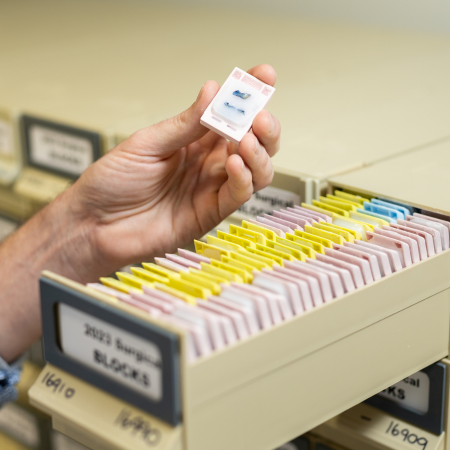
The Mater Research Biobank also has access to the Mater Pathology paraffin tissue stores. Tissue contained within paraffin blocks that are no longer required for diagnostic purposes may be requested for slide preparation and research use.
Associated clinical information is collected and stored for all samples, including demographics, medical history, pathology reports, imaging, and treatment information. Availability and completeness of this information are dependent on existing hospital and government records.
All information is de-identified to protect the donor’s identity.
History
The Mater Research Biobank, established in 2024, is owned by Mater Misericordiae Ltd and brings together three previously separate, specialised biobanks, each focused on distinct areas of research:
| The David Serisier Research Biobank was established in 2014 to enhance research in chronic respiratory disease, respiratory infections and lung cancer. This biobank was named in honour of A/Prof David Serisier, and his enormous contribution to the field of respiratory medicine. | |
 | The Mater Gynaecological Cancer Research Collaborative was established in 2012 as a multi-discplinary research initiative to improve our understanding of gynaecological cancers. The initial focus was on ovarian cancer, and led by Prof Lewis Perrin, Assoc Prof Jane Armes, Assoc Prof Jim Coward, Prof John Hooper and more recently Dr Rohan Lourie. The initiative expanded in 2013 to include endometrial cancer, and by 2015, it covered all gynaecological cancers treated at Mater. |
| The Mater-IHBI Breast Cancer Research Collaborative was established in 2017 by Prof Laura Bray as part of the Mater Research and Institute of Health and Biomedical Innovation (IHBI) at the Queensland University of Technology to better understand breast malignancies. |
For donors - Frequently asked questions
What does donation to the biobank involve?
Scientists and doctors who study medical and surgical conditions to find better ways of predicting, treating or even preventing some disease, need to look at a variety of samples from a large number of people with different diseases to understand these diseases better.
This research depends on participants donating samples and associated clinical data for research. The biobank can only collect and store your samples and associated clinical data with your permission.
If I donate samples, how much will the Biobank take?
The pathologist/doctor/surgeon will use whatever samples are needed to make your final diagnosis. The biobank will only receive samples left over that would normally be destroyed or archived if it were not donated.
The exception to this is if you have responded to a “specific medical condition research call out”. For these conditions, we may ask if you would be willing to have additional blood or “low risk” tests (such as a blood collection, nasal swab, or urine collection).
What will happen to my samples and health information?
Your health information and sample/s will be stored for an indefinite period of time in the Mater Research Biobank. We wish to store (or ‘bank’) the sample/s for potential, and as yet unspecified, ethically approved research in the future. If you agree to your sample/s and associated data being stored, you will be asked to sign a consent form. All information provided to researchers is de-idenfitied to protect your privacy.
What kinds of research will my samples be used for?
The biobank provides biological samples to scientists who are involved in various aspects of research, so we cannot say exactly what projects your samples will be used for now or in the future. Regardless of the specific details of the project, your samples will be used to study the causes of your condition and /or develop improved methods for the detection, diagnosis, monitoring and /or treatment of a variety of conditions. Alternatively, some researchers may want to study how diseases are passed on in families by comparing the genetic material present in both normal tissue and tissue affected by a condition; this is called genetic research.
Will I find out the results of the research using my sample/s and associated data?
You will not receive specific research results unless results are of medical importance to you or your family. This is because research by its very nature, is experimental, can take many years, and uses samples and data from a large number of people. What a researcher discovers in this context may be of little value to you, your family or your future health. A summary of research projects is available below under the Associated Publications tab.
What if I change my mind?
Participation is completely voluntary.
You can change your mind and withdraw your consent at any time, and it will not affect your medical care. If you wish to withdraw your consent, simply contact a representative of the Mater Research Biobank and we will send you a withdrawal of consent form.
Phone: 07 3163 2581
Email: ResearchBiobank@mater.org.au
If you have concerns or complaints about the conduct of the biobank, please contact Research Ethics Coordinator on 07 3163 1585 or email research.ethics@mater.uq.edu.au
For researchers
Pricing
Samples/data can not be sold. The biobank may charge researchers a fee to recover some of the costs of storing and administering its collection of samples and associated data, but sample/s or data are never sold for profit.
Requesting access
The Biobank Advisory Committee makes decisions about the suitability of providing biobank samples to projects. Due to the collaborative infrastructure of the Mater Research Biobank (MRB), researchers are encouraged to contact the Committee prior to submitting grant applications, as this may strengthen the feasibility and support of the proposed project.
Human research ethics committee (HREC) approval, or overseas equivalent, will be sought for any future studies related to biobank samples and associated data, including those requiring samples to be sent to collaborators. Specimens will be approved for research use only.
Researchers seeking access are required to complete a Biobank Access Request Form:
Mater Research Biobank Request Form
Once completed, submit the form to ResearchBiobank@mater.org.au
Associated publications
Ethics and governance
All research in Australia involving humans is reviewed by an independent group of people called a Human Research Ethics Committee (HREC). The ethical aspects of this Biobank have been reviewed and approved by the Mater Misericordiae Ltd Human Research Ethics Committee (EC00332).
This project will be carried out according to the National Statement on Ethical Conduct in Human Research 2023. This statement has been developed to protect the interests of people who agree to participate in human research studies.
Should you wish to discuss the study in relation to your rights as a participant, or should you wish to make an independent complaint, you may contact the HREC Coordinator or Chairperson, Human Research Ethics Committee, Mater Misericordiae Ltd Level 2 Aubigny Place, Raymond Terrace South Brisbane 4101 or telephone (07) 3163 1585, email: research.ethics@mater.uq.edu.au
Contact us
The Mater Research Biobank is open during usual working hours. If you have any technical questions about the way samples are being handled or you require further information about the Mater Research Biobank you may contact: Kaltin Ferguson (Biobank Manager) on 07 3163 2581 or ResearchBiobank@mater.org.au
Any person with concerns or complaints about the conduct of the biobank should contact the Research Ethics Coordinator on 07 3163 1585 or email research.ethics@mater.uq.edu.au