Three Mater Researchers are among the recipients of a record-breaking $2.5 million investment in improving detection and treatment of pancreatic cancer.
Pankind, Australia’s pancreatic cancer foundation, is aiming to triple survival rates of people with the disease by 2030 through the funding of 15 cutting-edge research projects.
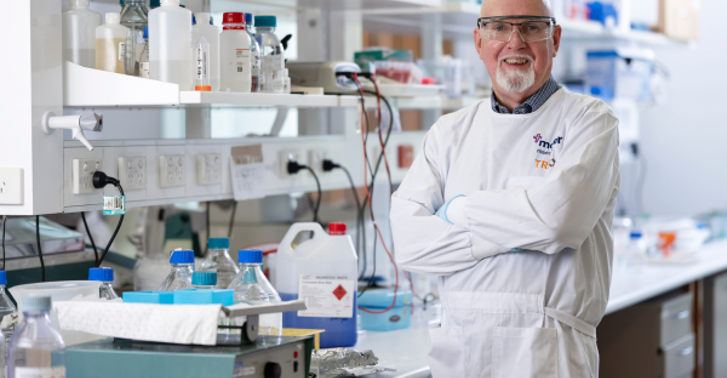
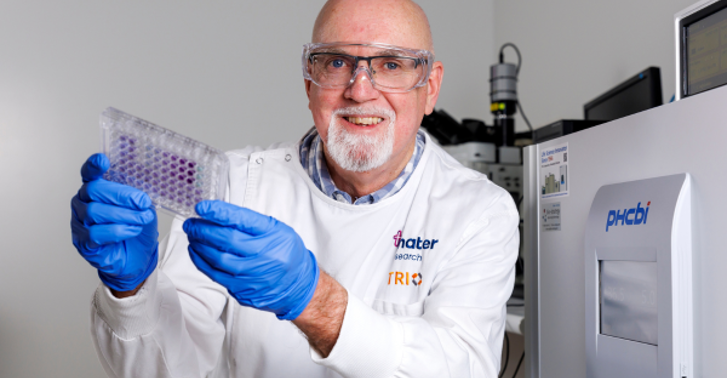
Mater Research Cancer Biology Group Leader Professor John Hooper has secured a $300,000 Treatment Accelerator Grant for his project, Panc-PET, a molecular imaging trial to guide targeted therapy for pancreatic cancer. This advanced research will perform a phase I clinical trial to evaluate the safety and biodistribution of a new contrast agent for PET/CT-based detection of pancreatic cancer. It is focused accelerating personalised care of people who have or at risk of developing pancreatic cancer.
In collaboration with the hepatobiliary surgical teams at the Royal Brisbane and Women’s Hospital and the Princess Alexandra Hospital and the nuclear medicine unit at the Royal Brisbane and Women’s Hospital, the project will test a new bio-molecule in 12 pancreatic cancer patients that binds strongly and specifically to the surface of pancreatic cancer cells. When linked to a low-energy radioactive particle and injected into the bloodstream, the bio-molecule will circulate until it attaches to cancer cells. The radiation emitted will then be detected using a PET scanner, allowing clinicians to pinpoint the cancer’s exact location and determine whether it is confined to the pancreas and is operable, or has spread and requires alternative treatment.
If the trial is successful, in future studies the bio-molecule will be adapted for treatment of pancreatic cancer by linking it to either a high-energy radioactive particle or a drug. This two-step process—first detecting cancer, then treating it—could revolutionise care by enabling personalised therapy and improving survival rates.

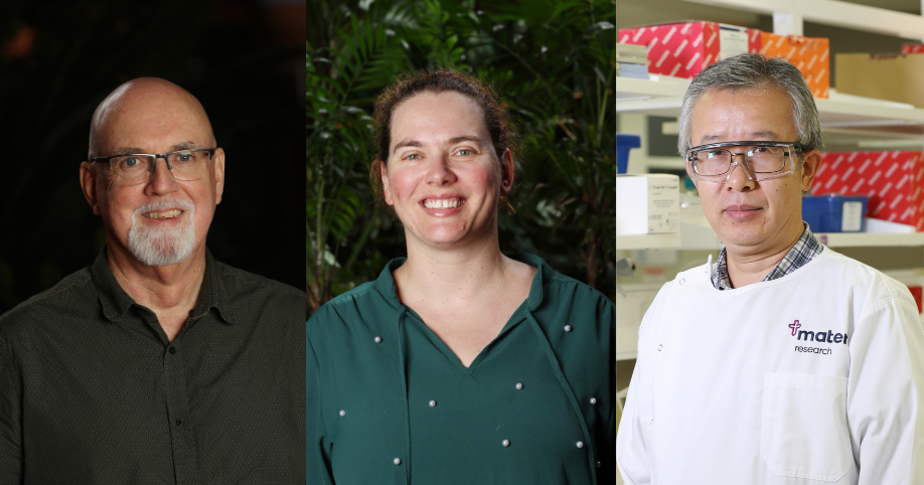
Professor John Hooper
In another exciting project Dr Michaela Kindlová, a member of Associate Professor Adam Ewing’s Translational Bioinformatics Research Group, was also awarded $100,000 for her project Improving early detection of pancreatic cancer by exploring the faulty methylation of pre-cancerous tissue. Pancreatic cancer, particularly its most common and lethal form pancreatic ductal adenocarcinoma (PDAC), has extremely low survival rates partly because it is so difficult to detect early. Dr Kindlová’s study aims to improve early detection by investigating abnormal cell growth within pancreatic lesions.
While PDAC is often linked to DNA sequence changes, emerging evidence suggests other factors, such as DNA methylation — a chemical modification that alters cell function without changing the DNA sequence—play a critical role. Improper methylation can disrupt normal cell behaviour and has been implicated in cancer development.
Dr Kindlová’s research will answer whether methylation changes in pancreatic tissue can detect early cancer development, and if switching methylation “on or off” in pancreatic cancer cells can intervene in this process.
Through collaborations with clinicians at Princess Alexandra Hospital and Royal Brisbane and Women’s Hospital, Dr Kindlová will access tissue samples from high-risk patients, including those with abnormal pancreatic lesions and those with a strong family history of PDAC.
Using cutting-edge sequencing technology, her team will identify methylation differences between healthy and abnormal tissues and explore whether correcting faulty methylation can restore normal cell function. Importantly, methylation is detectable in blood, meaning this research could lay the foundation for a blood-based biomarker for early pancreatic cancer detection, improving survival rates for PDAC patients.

Dr Michaela Kindlová
In addition, Dr Yaowu He, a senior member of Prof Hooper’s team, is a Chief Investigator on an important study led by clinician-researcher Dr William McGahan.
Dr McGahan’s team received $100,000 for the project, Seeing the unseen: a targeted fluorescent probe to detect otherwise invisible pre-cancerous lesions in the pancreas.
Like bowel, breast and skin cancer, pancreatic cancer begins as a small abnormal growth called a precursor lesion. If detected early, these lesions can be removed before they turn into cancer. While there are reliable diagnostic tools to find these lesions in other cancers—such as colonoscopies to detect polyps and mammograms to see changes in breast tissue—most pancreatic precursor lesions are invisible to current imaging techniques.
Dr McGahan’s team has shown that a new type of PET scan may detect precursor lesions at the critical stage of high-grade dysplasia, just before they become cancer. However, even if a PET scan identifies a suspicious area, the lesion remains invisible during surgery, making it impossible to accurately biopsy or remove the affected part of the pancreas.
The innovative solution? Fluorescence-guided surgery. By attaching a glowing fluorescent dye to the same molecule used in PET scans, surgeons could make these lesions light up under special light during surgery—helping the safe removal of lesions without the need to take large sections of the pancreas.
With this funding, Dr McGahan and Dr He will create this fluorescent molecule, test it in pancreatic tissue removed during surgery and then evaluate it in preclinical models of precursor lesions and early pancreatic cancer. If successful, the next step will be clinical trials in high-risk patients—bringing us closer to detecting and treating pancreatic cancer before it starts.
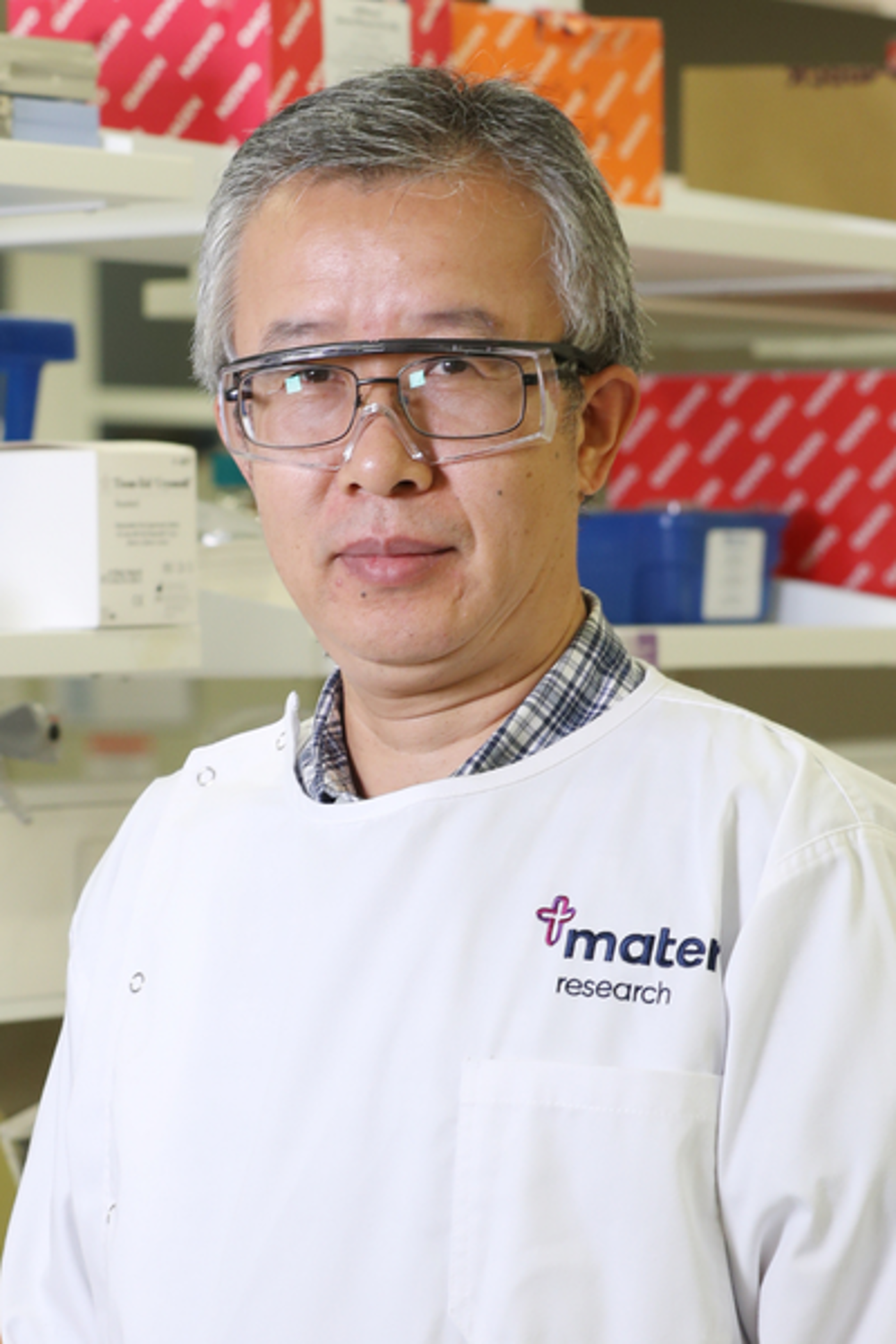
Dr Yaowu He
Mater Research Executive Director Professor Allison Pettit congratulated the three recipients.
“With current survival rates for pancreatic cancer at such low levels, these innovative projects offer hope for earlier detection and more effective treatments,” she said.
“We are proud to see Mater researchers leading the way in tackling one of the most challenging cancers.
"The three projects demonstrate once again the strong collaborative links of Mater Research in partnering to address the most challenging problems in a range of cancers including very poor outcome pancreatic cancer.”