
Mater Research is proud to announce an outstanding result in the 2025 Translational Research Institute (TRI) LINC Grant round, with Mater collaborations securing five of the 10 grants available.
Selected from a highly competitive field, the successful projects highlight the strength and impact of Mater’s collaborative research environment. Each project will receive $50,000 in funding over two years.
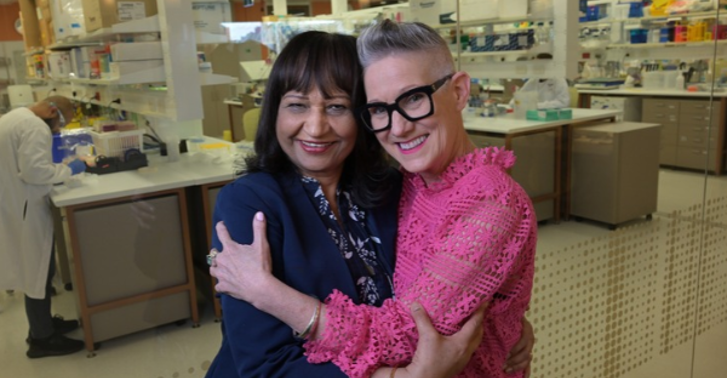
Mater Research Executive Director Professor Allison Pettit said the grants will support critical partnerships between clinicians and researchers, helping to translate discoveries into improved patient care.
“Congratulations to all Mater-affiliated teams on their innovative and translational research proposals,” Prof Pettit said.
“This achievement reflects the strength of our collaborative research culture.
“I look forward to seeing the outcomes of these projects and their impact on bridging the gap between bench and bedside.”
2025 LINC Grant Recipients
- Dr Soi Law (Mater Research) and Dr Camille Savoia (Metro South Health) for their project “Developing Novel Predictive Biomarkers to Guide the Application of EBV-Specific T Cell Therapy in Lymphoma: Correlative Study of the TREBL1 and TREBL2 Clinical Trials”. This project will analyse data from the TREBL1 and TREBL2 clinical trials to identify predictive biomarkers for Epstein-Barr Virus (EBV)-specific T cell therapy. By understanding these biomarkers, the team aims to better guide treatment application and improve long-term outcomes for lymphoma patients.
- Dr Behnam Rashidieh (Mater Research) and Dr Philip Rowell (Metro South Health) for their project “Decoding Dormancy: Preventing Reactivation of Dormant Breast Cancer Cells in Bone”. This project aims to address the devastating relapse of breast cancer in bone. The team will use patient-derived bone marrow aspirates and miniaturised vascularised bone organoid models to study how dormant cancer cells reactivate and to test targeted therapies like FAK and AXL inhibitors.
- Dr Cheng Xiang Foo (Mater Research) and A/Prof Jake Begun (Mater Health and Mater Research) and for their project “Oxidized Cholesterols as Novel Biomarkers in Inflammatory Bowel Disease”. This study will investigate the role of the GPR183/oxysterol axis in Inflammatory Bowel Disease (IBD) pathogenesis. By evaluating oxysterols in blood and biopsy samples from the Mater IBD Biobank, they aim to develop predictive biomarkers for early risk stratification and personalised treatment.
- Dr Asmerom Sengal (Mater Research) and Dr Nimithri Cabraal (Mater Health) for their project “Optimisation of hormonal therapy for early-stage endometrial cancer and atypical hyperplasia using patient-derived organoids (PDOs) and single cell spatial tumour analyses”. This research will establish laboratory-grown mini-tumour models to address the high failure rate of conservative hormonal therapy in early-stage endometrial cancer. The team will conduct drug screening on these models and utilize single-cell spatial transcriptomics to discover biomarkers that better inform treatment responses.
- Mrs Maria Oliveri (Mater Health) and Dr Bree Tillett (UQ Frazer Institute) for their project “Mechanisms of breastmilk protection in T1D: Deciphering if breastmilk proteins reduce disease risk”. The team will analyse breastmilk samples from the ENDIA longitudinal pregnancy-birth cohort study and, using highly sensitive mass spectrometry, will investigate whether specific breastmilk proteins reduce the risk of islet autoimmunity progression in children at risk of developing T1D.