A ground-breaking Australian clinical trial is offering new hope to patients with a rare and aggressive blood cancer linked to the Epstein–Barr virus (EBV), most commonly known for causing glandular fever.
The trial aims to restore the immune system’s ability to recognise and fight cancer cells.
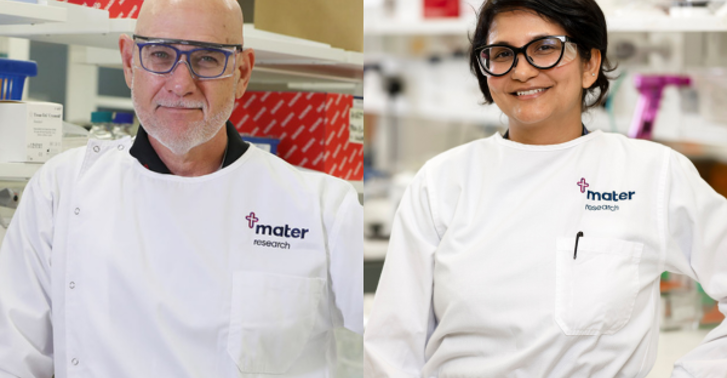
Funded by a $2.8 million grant from the Medical Research Future Fund, the TREBL2 trial is led by Professor Maher Gandhi and Dr Joshua Tobin of Mater Research’s Blood Cancer Research Group and represents a major step forward in personalised immunotherapy for EBV‑associated lymphomas.
Building on the promising outcomes of the earlier TREBL1 trial, which combined targeted therapy with donor‑derived EBV‑specific T cells, TREBL2 uses the patient’s own immune cells—autologous EBV‑specific T cells—to strengthen the body’s natural defence against cancer.
Using this cancer immunotherapy approach, Prof Gandhi, who is also CEO at Brisbane’s Translational Research Institute, said the ultimate goal with the trial is to provide a highly targeted but relatively well‑tolerated therapy that eradicates disease and prevents relapse by restoring immunity.
“The immunotherapy we have developed works in two ways. First, we take out some of the patient’s own immune cells that can recognise components of the EBV that have been picked up by the cancer cells, expand them in the laboratory and then give them back. Then we give an antibody that boosts the immune system response to fight the cancer.”
Dr Tobin said the personalised approach aims to improve treatment response and reduce relapse rates.
“EBV‑related blood cancers are a wide spectrum of disease,” he said.
“While each is quite rare, taken together they are surprisingly common. We hope that by tailoring treatments towards EBV specifically, rather than just the cancer cell, we can improve outcomes for people with a range of EBV‑related conditions.”
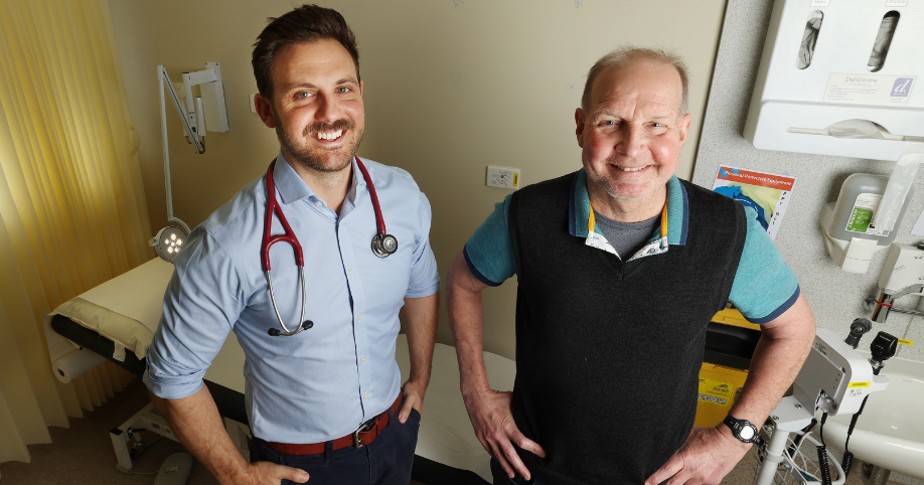
Brisbane haematologist Dr Andrew Nicol is the first patient to take part in the trial at the Princess Alexandra Hospital.
Diagnosed in January 2025 with extranodal nasal NK/T‑cell lymphoma—an aggressive blood cancer so rare that most haematologists only encounter it once or twice throughout their entire careers—Dr Nicol actively sought out clinical trials and enrolled in TREBL2.
As a clinician researcher, Dr Nicol has spent his career advancing personalised immunotherapy, including mobilising T cells to enhance immune responses against cancer. His commitment to improving outcomes for patients with rare or incurable cancers continues, even as he faces his own diagnosis.
Dr Nicol was admitted to the trial in September 2025, having already undergone seven months of chemotherapy and 50 rounds of radiotherapy treatment.
“My cancer is so rare most haematologists would only see one or two cases in their lifetimes. I had never seen it before,” Dr Nicol said.
“Without therapy, I would have had only a one in two chance of surviving until last Christmas.
“The science is behind this trial, but you don’t know if it will work in a human.
“However, I have hope that it will keep me alive. I have hope every morning when I wake up.”
Dr Nicol said he is currently living as close to a normal life as possible, including daily visits to the gym, swimming and lots of gardening.
"This shows that most patients receiving this new type of immune therapy will be able to live a normal life despite the therapy, in contrast to chemotherapy."
Dr Tobin said that the disease is an “ugly” one and Dr Nicol has been through a lot to achieve remission.
“We are delighted for him,” he said.
“The goal of this trial is to provide him with long lasting immune surveillance for EBV which we are hopeful will translate to longer remissions from his EBV-driven cancer.
“While the path to a cure is narrow, if Andrew stays in remission, it may be within our sights.”
As a father of three and grandfather of three, Dr Nicol said that even in the face of aggressive and difficult to cure cancer, clinical trials give patients a sense of purpose.
“Being part of a clinical trial gives you hope. Patients often said to me, ‘If I don’t get better, maybe someone else will.’ That altruism is powerful. It’s a human desire to be able to contribute to something bigger than yourself.
“Cancer research isn’t just about science—it’s about people. Every trial, every lab, every patient is part of a bigger story.”
To learn more about the trial, click here or email bcrg@mater.uq.edu.au.
About Epstein-Barr virus
- EBV is a ubiquitous γ‑herpesvirus infecting ~95 per cent of adults and establishing lifelong latency in B cells. Most primary infections occur in childhood and are asymptomatic, though some people develop infectious mononucleosis, which resolves within 2–4 weeks. Once initial infection has resolved, the virus lies dormant within host B cells for life with occasional asymptomatic reactivation rapidly contained by memory T cells.
- While usually remaining dormant for life, latent EBV is a prolific human cancer virus. EBV contributes to ~1–2 per cent of all cancers worldwide. Most EBV associated malignancies arise in B cells presenting as a variety of lymphoma subtypes, as well as solid tumours and rare soft tissue sarcomas.
- There is strong epidemiological evidence that Multiple sclerosis (MS), a chronic inflammatory demyelinating disease of the central nervous system is also caused by EBV.
- Patients with EBV-associated lymphoma are more likely to present with advanced-stage disease and poorer survival outcomes.